
Ginseng is usually called a health food because of its long use in traditional medicine, not because strong modern evidence shows it works for most things. The roots contain ginsenosides, compounds that have effects in lab and animal studies. In humans, the results are mixed. Some small trials suggest modest benefits for fatigue, mood, or blood sugar, but many are short, small, or industry-funded, and the findings don't consistently replicate.
Is American ginseng better? Not established. American ginseng (Panax quinquefolius) and Asian ginseng (Panax ginseng) are different species with somewhat different ginsenoside profiles. Traditional Chinese medicine describes American ginseng as more 'cooling' and Asian ginseng as more 'warming,' which is a traditional framework, not a measured property. Nobody has shown one is superior overall. Product quality matters more: the amount of ginseng, the extraction, and the testing vary a lot between brands.
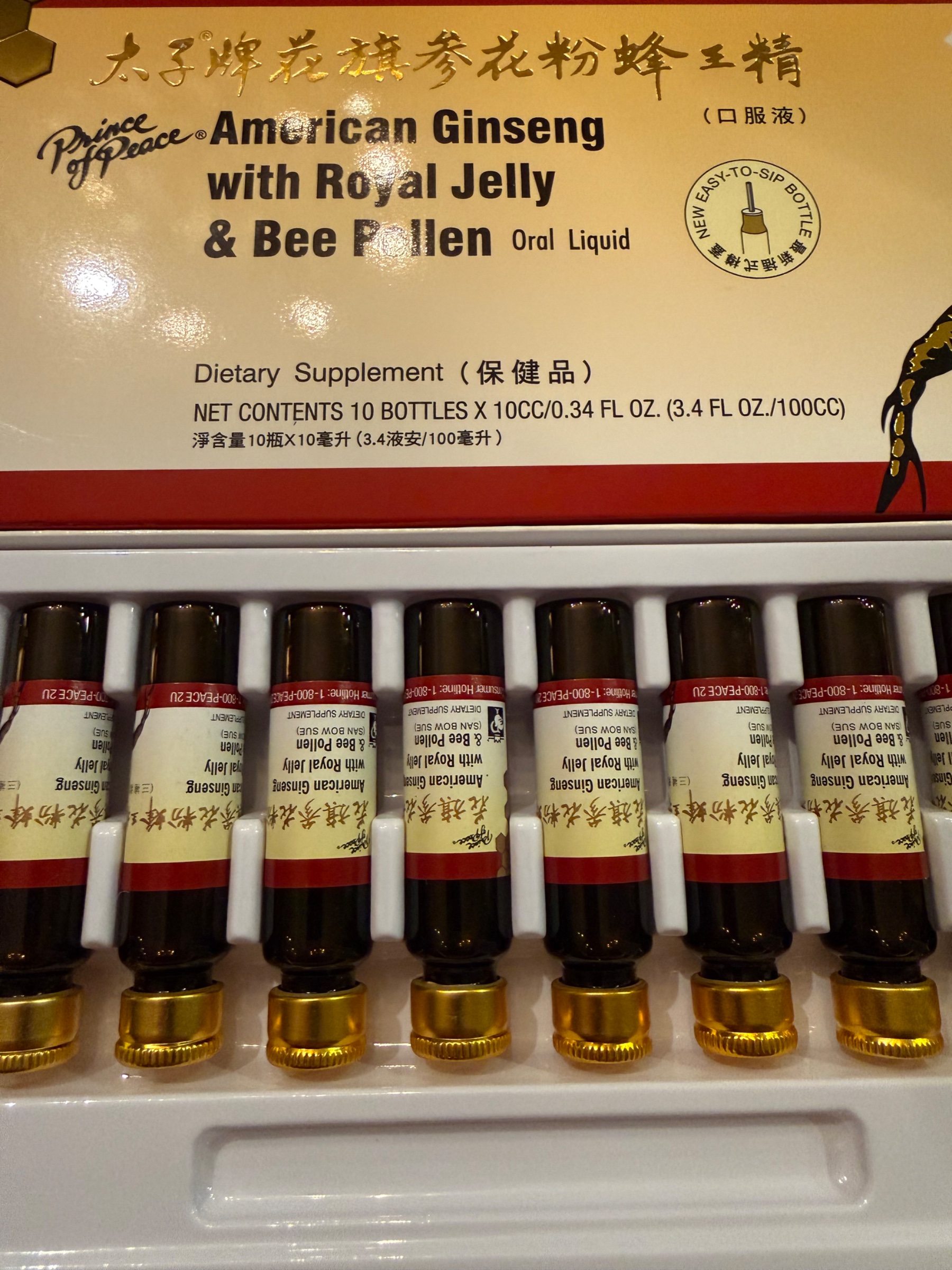
About this box: the label says it's a dietary supplement, 10 bottles of 10 cc oral liquid, combining American ginseng with royal jelly and bee pollen. Royal jelly and bee pollen can trigger serious allergic reactions, especially in people with pollen or bee-product allergies. Ginseng can also interact with blood thinners, diabetes medications, and some other drugs. If you take any medication or have a health condition, talk to your doctor or pharmacist about your situation before starting.
What's your experience with it, or what made you pick this one up?
Also discussed here:
- Why is Royal Jelly considered a health food?
To FieldNotes's point about the 'cooling' and 'warming' labels, the textual history is worth separating out. The oldest Chinese materia medica, the Shennong Bencao Jing (Classic of Materia Medica, compiled around the Han period), describes ginseng as ren shen, the Asian plant. It has no entry for American ginseng, which reached China through trade only in the 1700s. The Chinese name xiyangshen ('Western ginseng') marks that later arrival. So the cooling-versus-warming contrast is a later classification applied to a newer import, not something the classic texts say about it. Later commentators and modern TCM textbooks wrote the framework down, and the wording varies by edition, so if you want to check a specific claim, it's worth looking at the particular book and date it comes from. Does anyone have a pre-modern pharmacopoeia or an edition with a clear date that discusses xiyangshen?
