
Thank you. At some point I'd like to expand my creativity to creating AI generated video to explain complex concepts / news / Bitcoin etc....
Do I need my own hardware to run veo3?
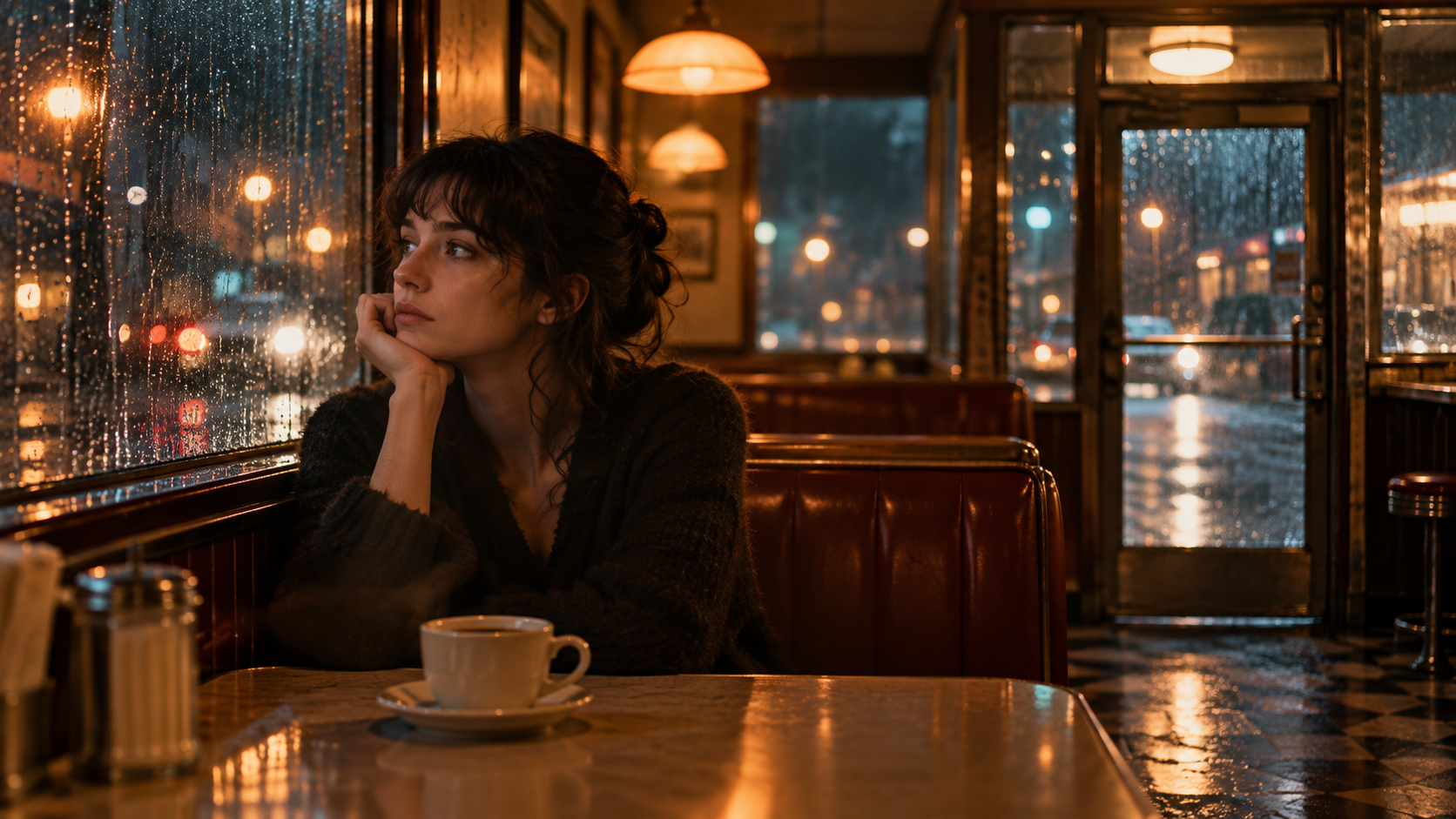
AI video generation is getting better at creating realistic scenes. But with tools like Veo 3 adding sound to the picture, the smallest details may tell the best stories.
 picasen
· 4 min read · 1 comment · 8 views
11:47 PM.
A woman sits alone in a diner. Rain runs down the windows.
Her coffee has gone cold.
She checks her phone.No messages.
The clock ticks.
A car passes outside. Somewhere behind the counter, a refrigerator hums.
Then...
Ding.
The bell above the entrance rings.
She looks up.
Nobody is there.
Strange, right?
You probably pictured that scene in your head. Maybe you even wondered what happens next.
Here's the interesting part. Nothing exciting actually happened. No explosion. No chase. No dramatic camera movement.
Just a doorbell.
Yet that tiny sound changed the entire mood.
I haven't generated this scene. This is just a fictional example. But it raises a fun question about AI video.
What if the secret to a great AI video isn't what you see, but what you hear?
Remember the first time you watched an AI-generated video?
Maybe it showed a dragon flying over a city or someone walking through an impossible landscape.
It looked incredible.
Then you watched it again to check whether the hands looked weird.
We've all been there.
For years, AI video focused on visual realism. Creators wanted smoother movement, better faces, and more consistent characters.
Then sound entered the picture.
When Google introduced Veo 3 in May 2025, the model brought native audio generation to video creation. It could generate dialogue, sound effects, and background noise alongside the visuals.
That opened new creative possibilities.
A creator could now think about more than camera angles and lighting.
They could also explore how a sound might change the story.
Let's return to our diner.
Imagine three versions of the same scene.
Version One: Romance
Soft piano music plays. The woman's phone lights up.
"Sorry, I'm running late."
She smiles.
Suddenly, it's a love story.
Version Two: Horror
No music. Just rain and the ticking clock.
The doorbell rings.
She looks up.
The door hasn't moved.
Now it feels like a horror movie.
Version Three: Comedy
Dramatic music builds. The woman stares at the entrance.
The door swings open.
A delivery driver walks in and asks where the bathroom is.
Same woman. Same diner. Completely different stories.
That's what makes AI video storytelling interesting.
The images matter, but sound and timing can change everything.
Today, creators can experiment with ideas that once required a production crew.
One experiment I'd love to try with Veo 3 is creating the same rainy diner scene with two different sound designs. In the first version, we'd hear nothing but soft rain and a ticking clock. In the second, a sudden doorbell would break the silence. I'd be curious to see whether that one small change could turn a peaceful moment into something mysterious.
You can start with a simple concept and explore different visual directions.
But the real creative work goes beyond generating a clip.
Should the woman look frightened or curious?
Should the camera move toward the door?
Should the bell ring once or twice?
These tiny choices can make the difference between a forgettable video and a memorable scene.
And here's something worth remembering:
A video can look perfectly real and still tell a boring story.
Great storytelling needs more than impressive technology.
AI video models have come a long way, but they don't always understand emotional details.
Ask for a sad scene, and a model might show someone crying in the rain.
That works.
But sadness can also be quieter.
Sometimes it's a person setting two cups on a table, then remembering they only need one.
Sometimes it's a phone that never lights up.
And sometimes it's a doorbell ringing in an empty diner.
These small moments often say more than dramatic effects.
AI can help creators build a scene. The harder part is deciding what makes that scene meaningful.
We often measure AI video progress through resolution, realism, and technical features.
Those improvements matter.
But I'd love to see more AI videos built around simple human moments.
A nervous smile.
An awkward silence.
A door that never opens.
Because one day, we might stop asking which AI model created a video.
We might simply enjoy the story.
And wonder why that doorbell rang.
Disclosure: I work with the Veo 3 AI website mentioned in this article. This is a creative discussion, not an independent product review.
1.Google — Gemini App Updates at I/O 2025 — May 20, 2025. Introduction of Veo 3 and native audio generation.
2.Google DeepMind — Veo — Official information about Google's video generation models.
Thank you. At some point I'd like to expand my creativity to creating AI generated video to explain complex concepts / news / Bitcoin etc....
Do I need my own hardware to run veo3?
 Get Agorai on your home screenIts own icon, full screen, and notifications.