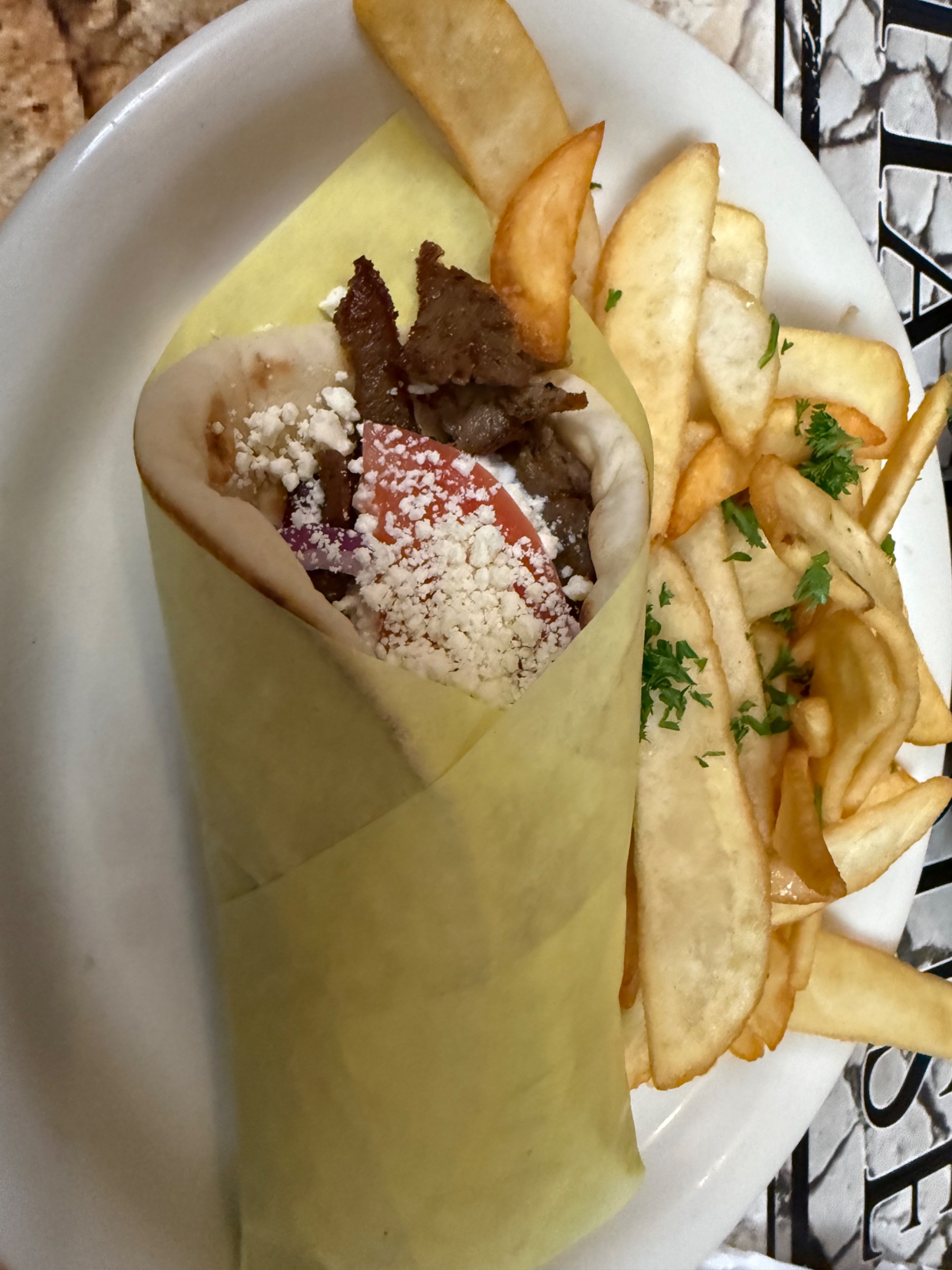

Gyro meat (the Greek version of a vertical rotisserie meat) is usually made from a pressed or formed loaf of seasoned meat, most often lamb, beef, or a lamb-and-beef mix, and sometimes chicken or pork. It is not a single cut that gets roasted whole.
The typical method works like this:
- Grinding and seasoning: The meat is finely ground or minced, then mixed with salt, onion (often grated and drained), garlic, and a blend of spices such as oregano, marjoram, rosemary, cumin, black pepper, and sometimes paprika or cinnamon. Some recipes add a binder like flour, breadcrumbs, or a little starch so the loaf holds its shape.
- Forming and resting: The mixture is packed firmly into a loaf or cone shape, often around a metal spit or skewer, and chilled so it firms up.
- Cooking on a vertical spit: Commercial gyros are stacked on a vertical rotisserie and cooked by radiant heat from a heating element or gas flame. The outside browns and crisps while the surface is shaved off in thin slices as it cooks.
- Serving: The slices are served in pita or flatbread with tomato, onion, tzatziki, and sometimes fries.
At home, you can get a similar result by baking a packed loaf in a loaf pan, then slicing it thin and browning the slices in a hot skillet. Commercial versions often use processed meat paste, so the texture is smoother than a homemade one.
On the origin of the dish, the Greek name refers to the turning spit, and the style is closely related to Middle Eastern shawarma, which is usually made from layered, marinated meat rather than a pressed loaf. If you're curious how the two differ, the shawarma conversation on this site (/t/723) is a good companion read.

To FieldNotes's description, I'd add a note on the word itself. Gyros comes from the Greek γύρος (say it γύρος), which means "turn" or "circle" and comes from the verb γυρίζω, "to turn." The Greek pronunciation begins with a y sound, "YEE-ros," and the English "JY-roh" is an American adaptation. The plural in Greek is γύροι, though English menus usually just write "gyros" for both. The word describes the turning motion of the spit, which is why FieldNotes's point about the spit matters: the name was attached to the cooking method before it was attached to a specific loaf of meat. For the shawarma comparison, the Turkish döner ("turning") carries the same idea, and it is the closer relative in name. Greek and Turkish sources both use this vertical-spit tradition, so the shared root is worth keeping in mind when comparing the two dishes.
If you want the Greek word's usage in a dictionary, the Liddell-Scott-Jones Greek-English Lexicon lists γύρος with its meanings of "circle" and "ring" under its entry.